Don't Treat Symptoms, Manage Your Health. How the Wellness 2.0 Approach Saves Time, Money, and Resources for Years to Come
- 10 min
- 378

Just a few decades ago, medicine primarily reacted to problems that had already occurred. The traditional model is simple: pain is a reason to see a doctor, an exacerbation is a signal to start treatment. However, modern individuals now realize that this approach always operates with a delay.
Fatigue, chronic inflammation, sleep, and digestive issues accumulate for years before turning into a diagnosis. It is precisely in this gap between "formal normalcy" and actual well-being that preventive medicine emerges – the foundation of the Wellness 2.0 concept.
The preventive approach changes the very philosophy of health care: instead of fighting consequences, it works with causes, functional impairments, and early biomarkers – long before the clinical manifestation of disease. In this article, we will explore the essence of this approach, the scientific and practical principles it's based on, and how it's applied in the modern health care system.
What Is Preventive Medicine in Simple Terms
Preventive medicine is a system for early risk detection and personalized health management, based on the analysis of biological, genetic, metabolic, and behavioral factors.
Unlike the classical model, which implies the "diagnosis-treatment" connection, it answers different questions:
- Why does the body lose its ability to self-regulate?
- Where exactly does the impairment originate – for example, in the gastrointestinal tract, immune, or endocrine systems?
- When should intervention occur to prevent progression to disease?
One of the founders of this approach, Professor Jeffrey Bland (Institute for Functional Medicine), emphasizes that most chronic diseases develop long before diagnosis and are associated with systemic inflammation and metabolic disorders (Bland J., Disease Delayed Is Disease Prevented).
How Preventive Medicine Differs from Routine Medical Check-ups
Routine check-ups are an important but limited tool. They answer the question: "Do you have a disease right now?" A preventive screening works differently – it identifies risks and functional imbalances when a person is still formally "healthy."
Let's consider the key differences:
- Age-based standards vs. a personalized approach
- Searching for diagnoses vs. searching for risks and imbalances
- Limited tests vs. expanded biomarker panels
- A reactive model vs. a proactive strategy
For example, blood glucose levels may remain within the normal range while insulin resistance is already developing. Research from Harvard Medical School shows that metabolic disorders begin 10–15 years before clinical diabetes (Tabák A.G. et al., Lancet, 2012).
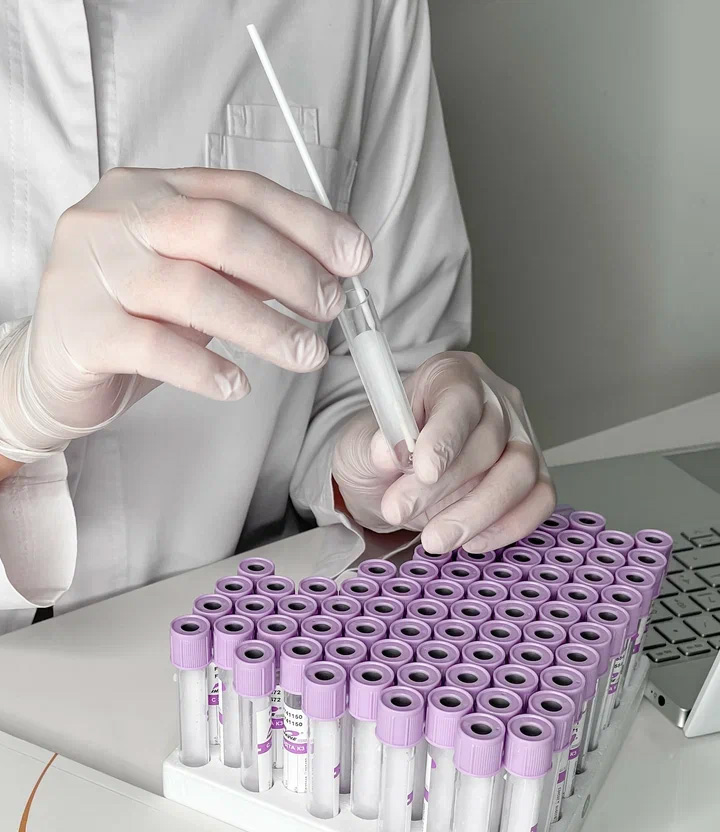
Key Tools of the Preventive Approach
Let's examine the key tools of the preventive approach that help identify risks at early stages and create personal health strategies before symptoms appear.
Genetic Analysis
Why is genetic testing important? It reveals individual predispositions – to inflammation, impaired detoxification, nutrient absorption peculiarities. This allows for more precise tailoring of nutrition and preventive strategies.
The Human Genome Project confirmed that genes determine only 20–30% of disease risks, while the rest depends on lifestyle and environmental influences.
Comprehensive Screenings and Inflammation Markers
The focus of preventive diagnostics is on markers of chronic low-grade inflammation – a condition where the inflammatory process occurs hidden, without bright symptoms, but gradually depletes the body's resources. Such markers include C-reactive protein, ferritin, homocysteine, interleukin-6, as well as the omega-3 to omega-6 fatty acid ratio.
Research published in the journal Nature Medicine states that such inflammation is one of the key mechanisms of aging and the development of most non-communicable diseases, from cardiovascular to neurodegenerative ones.
The Gut as the Foundation of Health
Analyzing digestion and the state of the microbiota is crucial because the "gut-brain axis" directly influences immunity, hormonal balance, and psychoemotional state.
Research by John Cryan and Ted Dinan shows that the gut microbiota affects brain function, including neurotransmitter production, stress response, and cognitive functions. Imbalances in it can lead to inflammation, metabolic issues, and mental health disorders. These connections are detailed in a 2012 Nature Reviews Neuroscience study.
The 5P Preventive Personalized Medicine
The modern development of the preventive approach has taken shape in the concept of 5P Medicine – a holistic system that makes health care manageable and conscious. The 5P concept includes the following components:
- Predictive: Identifies individual risks long before symptoms appear using genetic screenings, comprehensive check-ups, and analysis of hundreds of biomarkers, allowing work on causes, not consequences.
- Participatory: Involves the individual in the process: they understand diagnostic results, the logic behind recommendations, set their own goals, and actively participate alongside their personal physician.
- Personalized: Individual programs consider age, gender, genetics, lifestyle, and psychological profile, eliminating one-size-fits-all solutions.
- Preventive: Focuses on preventing impairments and strengthening health, not just treating diseases.
- Positive: Relies on psychological resources, works with stress, mindfulness, and forming habits that support the body and emotions.
As a result, 5P Medicine transforms wellness from a one-off measure into a strategy where every decision is based on data, individual characteristics, and a person's psychological resources, ensuring a high quality of life and active longevity.
MAYRVEDA – Practical Implementation of the Medicine of the Future
At the MAYRVEDA center, the principles of 5P Medicine are implemented in practice – from deep diagnostics to lifestyle formation.
Our work is built on international clinical protocols and interdisciplinary expertise: specialists from over 20 fields – from gastroenterology and endocrinology to neurology and cardiology – participate in forming a personal wellness strategy. This allows viewing the body as a unified system.
A special place in the MAYRVEDA approach is given to the synergy of medical systems. What does this entail? Prevention, Austrian Mayr therapy with a focus on the GI tract, Ayurvedic practices, and the natural factors of the Caucasian Mineral Waters are combined into a single restorative model.
Deep diagnostics, including the analysis of hundreds of biomarkers for hidden inflammation and oxidative stress, becomes the starting point for targeted and justified work. The result is not just improved well-being, but measurable changes and a developed skill for managing one's health.
The Connection Between Preventive Medicine, Ayurveda, and Mayr Medicine
Ayurveda and the method of Franz Xaver Mayr, long before the term "preventive medicine" appeared, placed prevention above treatment. Traditional Indian medicine views the state of balance through the lens of doshas, the strength of agni, and the degree of ama accumulation. Doshas reflect the body's regulatory type, agni – the ability for digestion and metabolic transformation, and ama symbolizes products of incomplete metabolism that accumulate when systems are overloaded. Modern medicine describes these same processes using different language – through chronic low-grade inflammation, metabolic disorders, and functional overload of the body's detoxification systems.
Mayr therapy focuses on early functional signs of GI tract disorders, which can precede laboratory changes by years. This approach allows for identifying risks and adjusting lifestyle before serious diseases appear, combining scientific control with individual recovery programs.
At the MAYRVEDA Sanatorium, these principles are realized through the goals of personalized programs, for example:
- Detox & Recovery: Deep GI tract diagnostics, nutrition according to the Mayr protocol, Ayurvedic procedures.
- Preventive Prophylaxis: Comprehensive screenings, genetic tests, and lifestyle recommendations.
- Ayurvedic Reboot: Comprehensive restoration with an emphasis on balancing the doshas, nutrition, and procedures to reduce inflammation.
Thus, the combination of Ayurveda, Mayr medicine, and modern preventive approaches at MAYRVEDA creates a unique personalized path to maintaining health and longevity.
Why Wellness 2.0 Is Not About Restrictions
Wellness 2.0 is a rejection of universal rules; it's a transition to a conscious, personalized approach to health. It considers the body's individual characteristics, biorhythms, genetic and metabolic predispositions, as well as reactions to nutrition, physical activity, and stress.
As noted by Harvard Medical School professor David Sinclair, health and longevity are manageable processes depending on the environment, lifestyle, and decisions made by an individual.
"Aging is a disease that can be slowed, prevented, and even reversed" (Sinclair D., Lifespan, 2019).
This approach allows not for limiting joys and habits, but for directing them towards strengthening the body's resources, preserving energy, internal balance, and a high quality of life in the long term.
Take the First Step Towards Managed Health
Preventive medicine works when it becomes part of life, not a one-time measure. At MAYRVEDA, this approach is implemented as a holistic system – from deep personalized diagnostics to forming habits that continue to work even after the program ends.
If the idea of Wellness 2.0 – conscious, scientifically grounded, and personalized – resonates with you, explore the MAYRVEDA programs and learn how preventive medicine can work specifically for you.
Learn more about the MAYRVEDA approach and programs
Choose a personal wellness program
Q&A
What is preventive medicine in simple terms?
Preventive medicine is a systematic, scientifically grounded approach to preserving health, focused on preventing diseases and identifying risks before symptoms appear. The main task is to detect unfavorable factors at early stages, before illness develops.
Is it suitable for healthy people?
Yes. Preventive medicine is especially valuable for people without obvious diagnoses because it allows for identifying potential problems at the earliest stage, even before clinical symptoms develop, and providing recommendations on lifestyle, nutrition, physical activity, and additional examinations.
Does it replace classical medicine?
No. It complements, not replaces, traditional medicine. Preventive medicine can significantly increase the effectiveness of classical treatment, but emergency, acute, and chronic conditions still require traditional clinical diagnosis and therapy.
Why is personalization important?
Personalization means that the same measures can affect different people differently. Genetics, family history, age, metabolism, daily habits, and current health status determine which examinations and measures will be most beneficial.
When is the best time to start?
The sooner a person starts applying preventive approaches, the greater their chances of preventing the development of serious diseases or mitigating their impact in the future. Preventive medicine also helps form sustainable healthy habits for life.
Sources:
